
Planetary Nebulae
1. Aims of the project:
- prepare a new catalogue of planetary nebulae at 30 GHz using new receiver OCRA-p
- propose PN as a good calibrator' sources use for making fast sky surveys
- model PN free-free emission and compare it with new data
- examine theory of presence of spinning dust effect in PN spectra
2. Properties of PN:
- bright radio sources
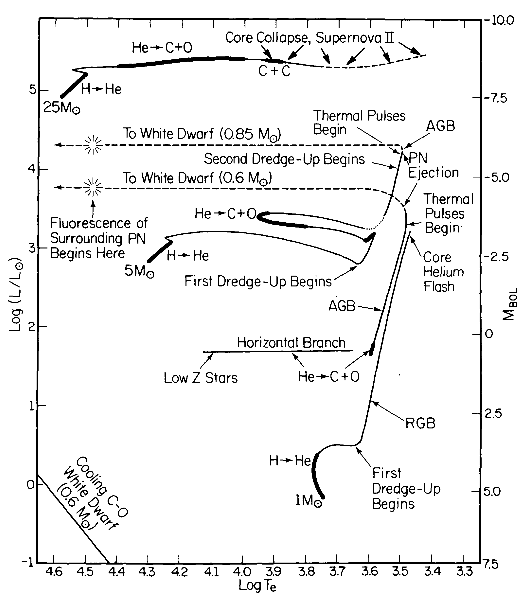
- one of fastest phase of stellar evolution: from end of AGB mass loss to rapid cooling: 103-105 years
- PN seen when central star reach temperature 2x10⁴ K and ionise the ejecta
- well knows sources of free-free emission
- emission does not suffer interstellar extinction present in optical region
3. Spinning dust effect:
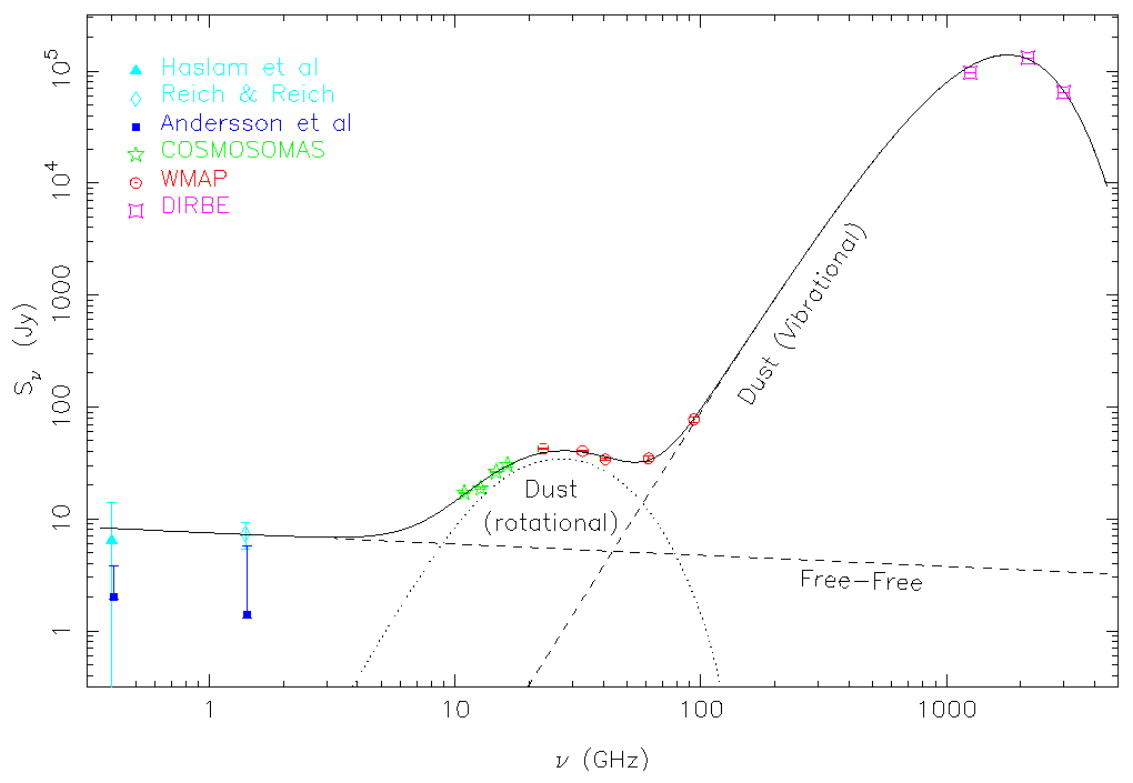
- The effect detected in LDN 1622 (Finkbeiner, 2006) and in HII region located in Perseus (Watson, 2005),seen on the picture below
- emission correlated with thermal dust emission at 100 µ m, but not observed in Hβ line
- possible explanation: electric dipole radiation from spinning very small grains (VSGs) or spinning dust (Draine &Lazarian, 1998)
4. Results:
- detection 93 out of about 400 examined
- found correlation with 30 GHz measurement and placement on IRAS diagram and its possible explanation
- modelled spectra of free-free emission (from Siódmak and Tylenda, 2001) based on 5 GHz observations
- no spinning dust effect observed in PN
MASTER THESIS (2007):
-
Pomiary gęstości strumienia radiowego mgławic planetarnych na częstotliwości 30 GHz przy użyciu odbiornika OCRA-p